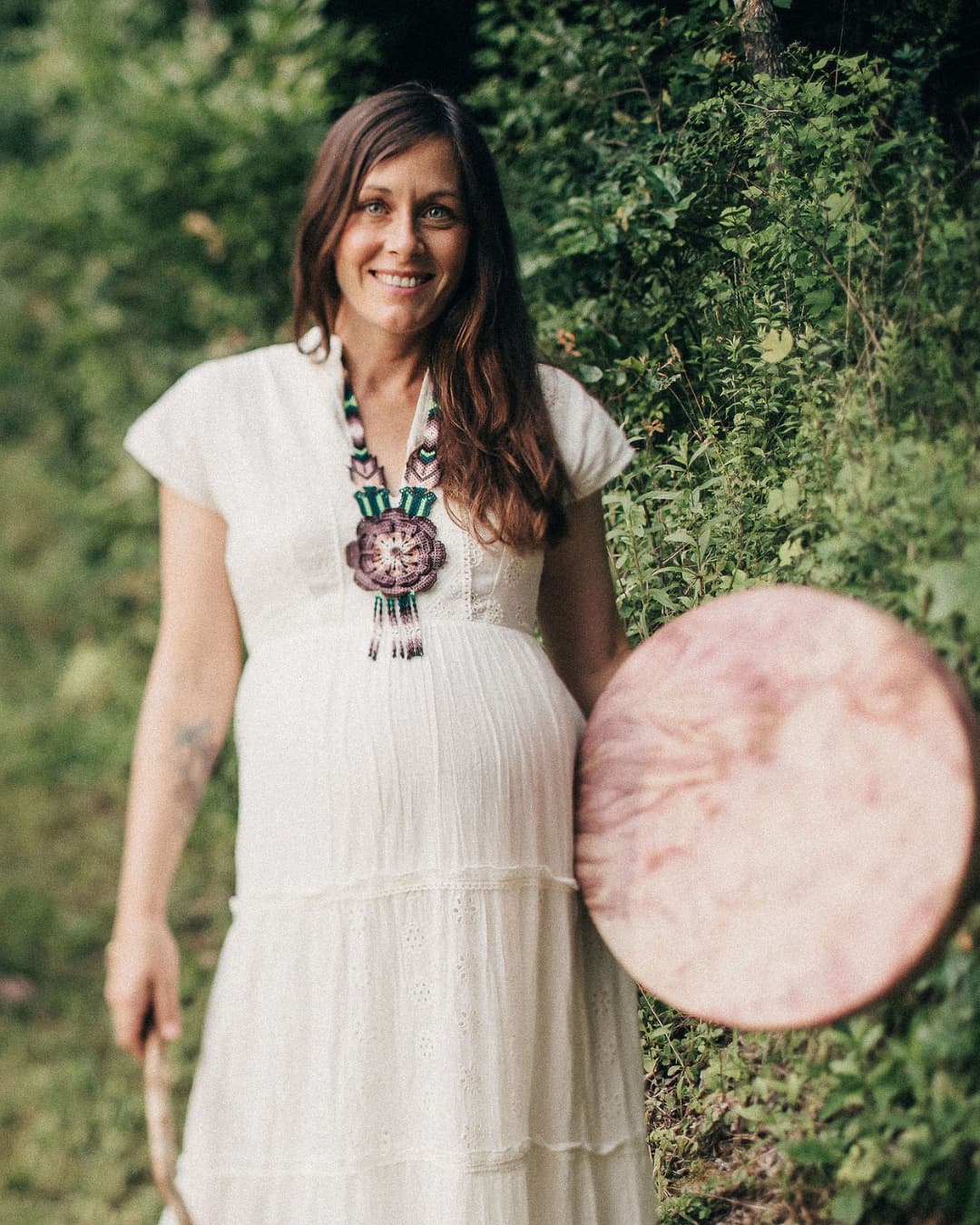
sacred birth
How to Host a Blessingway: A Mother Blessing Ceremony
A blessingway, also called a mother blessing, is a ceremony that honors a pregnant woman's passage from maiden to mother in the weeks before she gives birth. Instead of gifts for the baby, guests offer blessings, stories, and support, so she arrives at her birth feeling held rather than afraid.
Published May 15, 2017 · Updated September 13, 2026

Long before baby showers, women gathered around one of their own as she neared her birth, not to celebrate the baby, but to hold the mother. A blessingway is a modern return to that older instinct. It gathers a woman's circle to honor her passage into motherhood and to send her toward her birth feeling loved, resourced, and unafraid.
If someone you love is expecting, hosting a blessingway is one of the most meaningful gifts you can offer. Here is what it is, how it differs from a baby shower, and how to hold one beautifully.
What is a blessingway?
A blessingway is a gathering that centers the mother-to-be's inner readiness for birth rather than the arrival of the baby. Where a baby shower celebrates the child and fills a nursery, a blessingway fills the mother, surrounding her with blessing, story, and ritual so she can set down her fears and step toward labor in trust. It is quieter, more intentional, and unapologetically focused on her.
How is a blessingway different from a baby shower?
A baby shower is for the baby. A blessingway is for the mother. At a shower, the guest list is often large and the focus is gifts and games. At a blessingway, the circle is small and chosen by the mother, and the focus is emotional and spiritual support: honoring her, witnessing her, and blessing her passage into motherhood. Many families now hold a blessingway instead of, or alongside, a traditional shower.
Where the blessingway comes from
The blessingway has its roots in the Diné (Navajo) tradition, where ceremonies of protection and beauty mark life's thresholds. Out of respect for those origins, women who are not part of that culture usually hold what is more accurately called a mother blessing, drawing on the same loving instinct without claiming the specific sacred ceremony it grew from. Held this way, with acknowledgment and care, it becomes a heartfelt way to honor a universal passage: the crossing from maiden to mother.
How to host a blessingway, step by step
There is no single correct way to hold one. Let these steps guide you, and let the mother's wishes lead.
Ask the mother who she wants there. The whole experience should feel safe and uplifting for her, so invite only those she genuinely wants present, and quietly leave out anyone she would rather not have witnessing her.
Choose a comfortable space. Ideally somewhere other than her own home, so she is not tending to guests. If she is planning a home birth, she may prefer to hold it at home to fill the space with the same loving energy she will birth in.
Create a sacred space. Soft music, candles, cushions, and blankets turn any room into a nest. Invite guests to remove their shoes and gather in a circle around her. You might open with a few quiet words or an intention to settle everyone into the moment.
Offer nourishing food. Warm, simple, nourishing food is part of the care. Prepare it yourself or ask each guest to bring something to share alongside their blessing.
Move through meaningful rituals. Choose a few that resonate, rather than trying to do everything:
- Brush her hair or make her a flower crown to honor her.
- Massage her feet with a calming oil such as lavender.
- Invite her to sit in the center and describe the birth she hopes for, while everyone holds it as an intention for her. This is also a tender moment for her to name any fears aloud and be witnessed in them.
- Pass a single bead around the circle, each guest offering a blessing as they thread it, to make a necklace she can wear in labor and feel her circle with her.
- Speak blessings into a bowl of water, then use that water to wash her feet.
- Create henna or paint art on her belly, or on the hands of everyone present.
- Bring or make candles for her to light when labor begins, so she remembers her strength.
- Make birth affirmation cards or art she can hang in her birthing space.
Close by sending her off full. A blessingway should end with the mother feeling embraced by the strength of the women around her, carrying their collective wisdom into her birth.
Carrying the blessings into your birth
The real gift of a blessingway is that it does not end when everyone goes home. The bead necklace, the candles, the affirmation art, all of it travels with her into the birthing room, whether she is birthing at home, in a birth center, or in a hospital. Each object becomes an anchor, a physical reminder that she is held. Preparing this way, surrounded and unafraid, is the heart of approaching birth as a sacred rite of passage rather than an ordeal to get through.
A blessing to close
However you hold it, let the heart of a blessingway be simple: a woman, surrounded by her people, reminded that she is strong, that she is loved, and that she does not cross this threshold alone. Send her toward her birth full.
What would it mean, to let yourself be held like that before your own birthing day?
Frequently asked questions
When should you have a blessingway?
Most families hold one in the last month or so of pregnancy, often around 36 weeks, close enough to birth that the blessings feel present as the day approaches, but with a little room to spare in case the baby comes early.
Is a blessingway cultural appropriation?
It is a fair question. The word blessingway comes from a sacred Navajo (Diné) ceremony, so many people now use the term mother blessing to honor that origin while creating their own ritual. The respectful path is to draw inspiration without copying closed or sacred practices, and to name where the tradition comes from.
What do you do at a blessingway?
Guests gather in a circle to honor the mother through simple rituals: sharing blessings, making a birth bead necklace, washing her feet, painting her belly, and offering candles or affirmations she can use during labor.
Who hosts a blessingway?
Usually a close friend, sister, or relative hosts it for the mother-to-be, choosing the guests and rituals together with her so the whole experience feels safe and uplifting.
What do you bring to a blessingway?
Rather than baby gifts, guests often bring a blessing or story, a bead for the labor necklace, nourishing food to share, or a small meaningful item for the mother rather than the baby.