
sacred birth
Birth as a Rite of Passage: Reclaiming Natural Childbirth
Birth is a rite of passage because it is one of the fastest and most complete identity transformations a human being undergoes: the crossing from woman to mother. Like other rites of passage, it has a threshold that changes you, which is why the experience so often feels far bigger than the physical event alone.
Published January 23, 2026 · Updated September 13, 2026
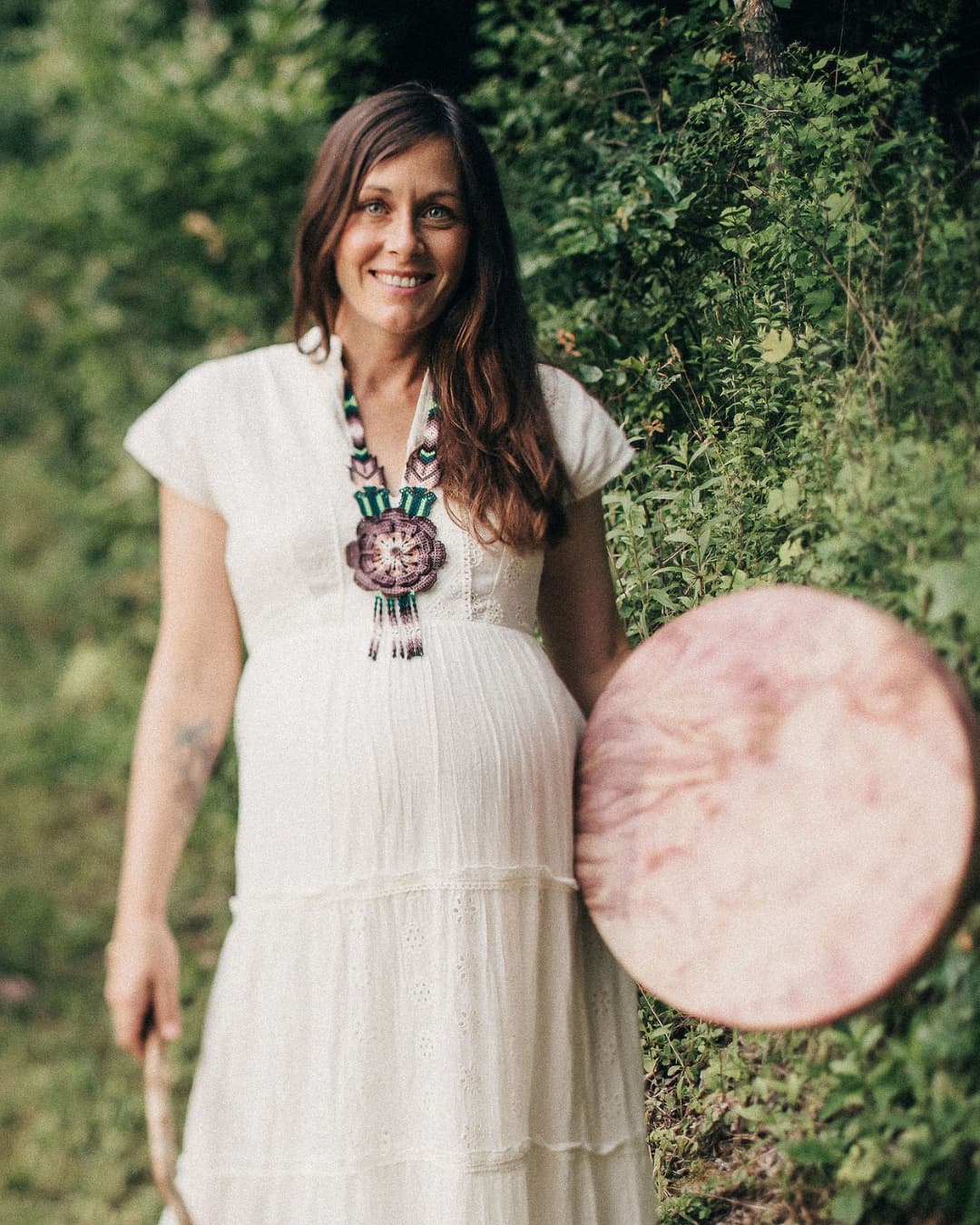
Throughout history, cultures marked their most significant thresholds with ceremony and reverence. Birth is perhaps the most profound threshold of all. In the space of hours, a woman's identity shifts from woman to mother, and she does not come back the same. Understood this way, natural childbirth is not only a medical event to get through. It is a rite of passage, an initiation into a new self.
How is birth a rite of passage?
A rite of passage is a marked crossing from one stage of life into another, and birth fits that shape exactly. Pregnancy separates a woman from the life she knew, labor is the threshold itself, and new motherhood is the return in a changed form. This identity transformation even has a name, matrescence, the becoming of a mother, and naming it helps explain why birth reverberates through a woman's whole sense of self, not just her body.
Ancient wisdom: how our ancestors honored birth
For most of history, birth was held as a sacred passage. Expectant mothers were surrounded by experienced midwives and wise women who held space, offered privacy, and carried a deep trust in the body's wisdom. That web of support, woven from women's knowing, is much of what let a laboring woman feel safe enough to soften and open.
When a woman feels genuinely safe, in body, heart, and spirit, her nervous system settles. In that settling, labor tends to flow more easily, and many women describe touching something vast and timeless in it.
How fear reshaped our rite of passage
Something shifted when birth moved largely into hospitals and the circle of familiar women was replaced by a clinical setting. To be clear, that shift also saved countless lives, and modern obstetric care is a genuine gift when it is needed. The problem is not doctors, hospitals, or interventions. The problem is a wider culture that came to frame birth as an emergency to fear rather than a passage to move through.
Media reinforces that framing. Birth on screen almost always means panic, sirens, and a desperate plea for relief. It is the story most of us absorbed long before our own first pregnancy, so it is no surprise that many women approach birth braced for the worst.
The numbers reflect how far the pendulum swung. In 2023, the finalized CDC data puts the US cesarean rate at 32.3 percent of births, and cesarean birth is now among the most common surgeries in the country. Cesareans are often necessary and life-saving, and this is not an argument against them. It is an observation that a fear-first birth culture, and the cascade of interventions fear can set in motion, deserves a second look. Alongside the physical outcomes, a meaningful number of women describe their births as emotionally difficult or traumatic, and that inner experience matters too.
Understanding the fear-tension-pain cycle
In the 1920s, the English obstetrician Grantly Dick-Read made a striking observation and named the fear-tension-pain cycle. When a woman is afraid, her body triggers its fight-or-flight response and pulls blood away from the uterus. The working muscle, now short on blood flow, tightens and strains, which sharpens sensation, which deepens fear, which tightens the loop further.
Inside that loop, reaching for relief is completely understandable, and every woman deserves it without judgment. The invitation is simply that there is another way in too: to meet the fear before labor, so the cycle has less to grip. That is the heart of releasing the fear of childbirth at its root rather than only managing it in the moment.
Reclaiming birth: breaking the cycle of fear
Marie Mongan, who developed HypnoBirthing, put it plainly: the spirit of women with respect to their own birthing power has been broken, and tending to fear is essential to restoring it. Understanding the fear-tension-pain cycle is itself a form of power, because knowledge loosens fear's grip.
Reclaiming birth as a rite of passage usually rests on a few things: preparing early, including processing fear and old stories rather than only learning the stages; building a supportive team, whether that includes a partner, a doula, a midwife, or trusted friends; and choosing, on purpose, to enter labor in trust. None of this requires any particular birth setting. A woman can be initiated into her power in a hospital as fully as at home.
Birth can be intense without being suffering
Here is a truth that rarely gets airtime: many women who prepare this way describe their births as powerful and even beautiful, not as an ordeal survived. When a woman feels safe, her body tends to release more oxytocin and less adrenaline, and the sensations of labor, still intense, are often experienced as purposeful rather than as pain to escape. Some women even describe moments of ecstasy or awe.
This is not a promise that birth will be painless, and no honest guide would make one. Bodies and births are their own, and outcomes cannot be guaranteed. It is simply a reminder that the terrified, screaming picture we were handed is not the only possibility, and that trust changes the experience more than most of us were ever told.
Your birth can be your rite of passage
Wherever and however you birth, you deserve to meet it with dignity, support, and the chance to discover your own strength. Birth can initiate you into a fuller version of yourself, and much of what makes that possible is inner: trust, surrender, and a willingness to open, to your baby, to the process, and to the creative force moving through you. If you want to prepare for it as the threshold it is, approaching birth as a sacred rite of passage is where that work begins.
Your birth matters. You matter. Your body is wise, and your power has been waiting for you all along.
A word to close
You were not born to fear your own body. Somewhere beneath the stories you were handed is a knowing older than all of them, that you are capable, that your body is wise, and that this crossing was always meant to make you more yourself, not less.
What might your birth become, if you let it be a threshold you walk through in your power, rather than an emergency to survive?
Frequently asked questions
Is birth a rite of passage?
Yes. A rite of passage is a marked crossing from one life stage to another, and birth is exactly that: the threshold from woman to mother. It changes a woman's identity, not only her body.
What are the three stages of a rite of passage?
Separation, threshold, and return. First you leave your old life behind, then you cross through the intense in-between of the threshold, and finally you return transformed. Pregnancy, labor, and new motherhood follow exactly this shape.
Why does childbirth feel so transformative?
Because it is a whole-person transformation called matrescence, spanning body, hormones, emotions, and identity, concentrated into one intense passage. Birth is the threshold at the center of that change.
Can birth be a rite of passage even in a hospital?
Yes. A rite of passage is about the inner crossing, not the location. You can meet birth as an initiation in a hospital, a birth center, or at home, simply by bringing intention and reverence to the threshold you are moving through.
